Talking to Teachers About a Stoma
Talking to teachers about your child's stoma requires careful planning and consideration of privacy. Recent evidence shows that clear communication with school staff helps create a supportive environment while maintaining your child's dignity and confidence.
Why Tell Teachers About Your Child’s Stoma?
Teachers and key school staff play a major role in your child’s day. Teachers and key school staff need to understand your child's stoma to provide appropriate support for their health, safety, and emotional wellbeing at school. When teachers are properly informed, students with stomas feel safer and more included in school activities, making it essential for children's psychosocial adjustment.
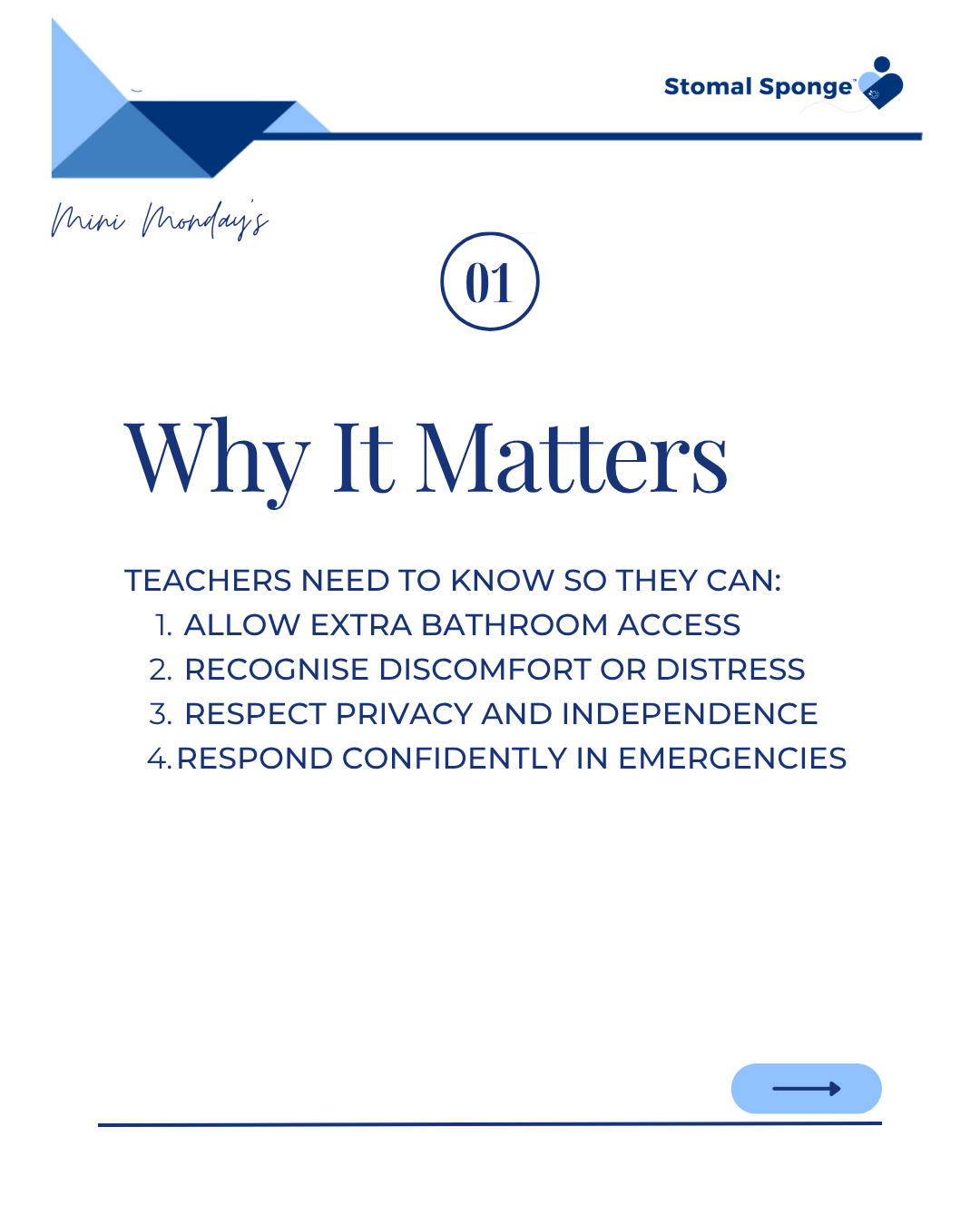
Knowing that your child has a stoma allows them to:
Support bathroom needs without drawing attention
Understand why your child may carry medical supplies
Respond appropriately in case of discomfort or emergency
Offer privacy, dignity, and inclusion in school life
It is recommend requesting that this information be kept private and only shared with those who need to know until your child can independently decide who to tell. Recent research shows that privacy concerns are among the top issues for children with stomas in school settings.
What Do Teachers Need to Know?
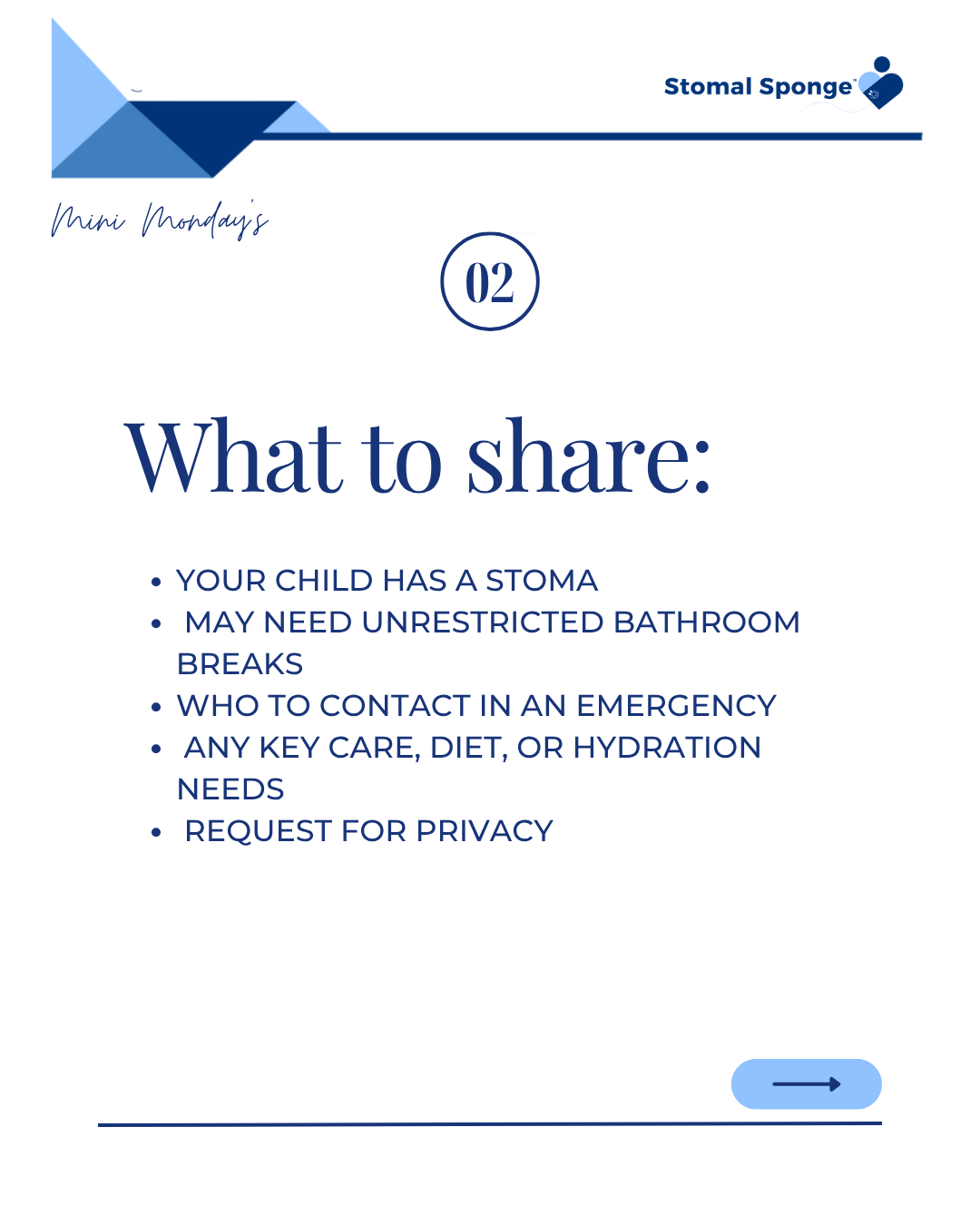
You don’t need to share your child’s full medical history. Focus on what’s necessary to ensure safety, comfort, and wellbeing during the school day. Teachers and staff should know:
Your child has a stoma and may need unrestricted bathroom access
Any signs of distress or emergency to look out for
Who to contact if your child needs assistance
Any relevant care needs, such as changes in diet or hydration
Your request for discretion and privacy
Ask that this information is shared only with staff who need to know, such as classroom teachers, aides, or the school nurse.
How to Approach the Conversation
Plan a short meeting with your child’s teacher, school nurse, and support staff before the school term begins or shortly after surgery. Bring a short, one-page summary of your child’s stoma care needs so staff can keep it on file which helps reduce confusion and gives everyone the same information. Involve your child in the discussion if they are ready and practice how your child can respond to peer questions with confidence.
Many families also like to create a “stoma passport.” Think of it as a mini cheat-sheet: one side lists practical details such as bathroom breaks, supplies, and emergency contacts; the other offers quick tips for privacy and dignity. Handing staff a passport means they do not have to hunt for answers if a problem pops up. It may also be a good idea to walk the campus with staff and locate the best toilets for your child in advance. Research shows that easy access to a private bathroom is one of the top accommodations for students with stomas, so confirm which restroom is unlocked, close by, and see if it is possible to keep stoma supplies stored here discretely. A short tour today can spare your child a stressful scramble later.
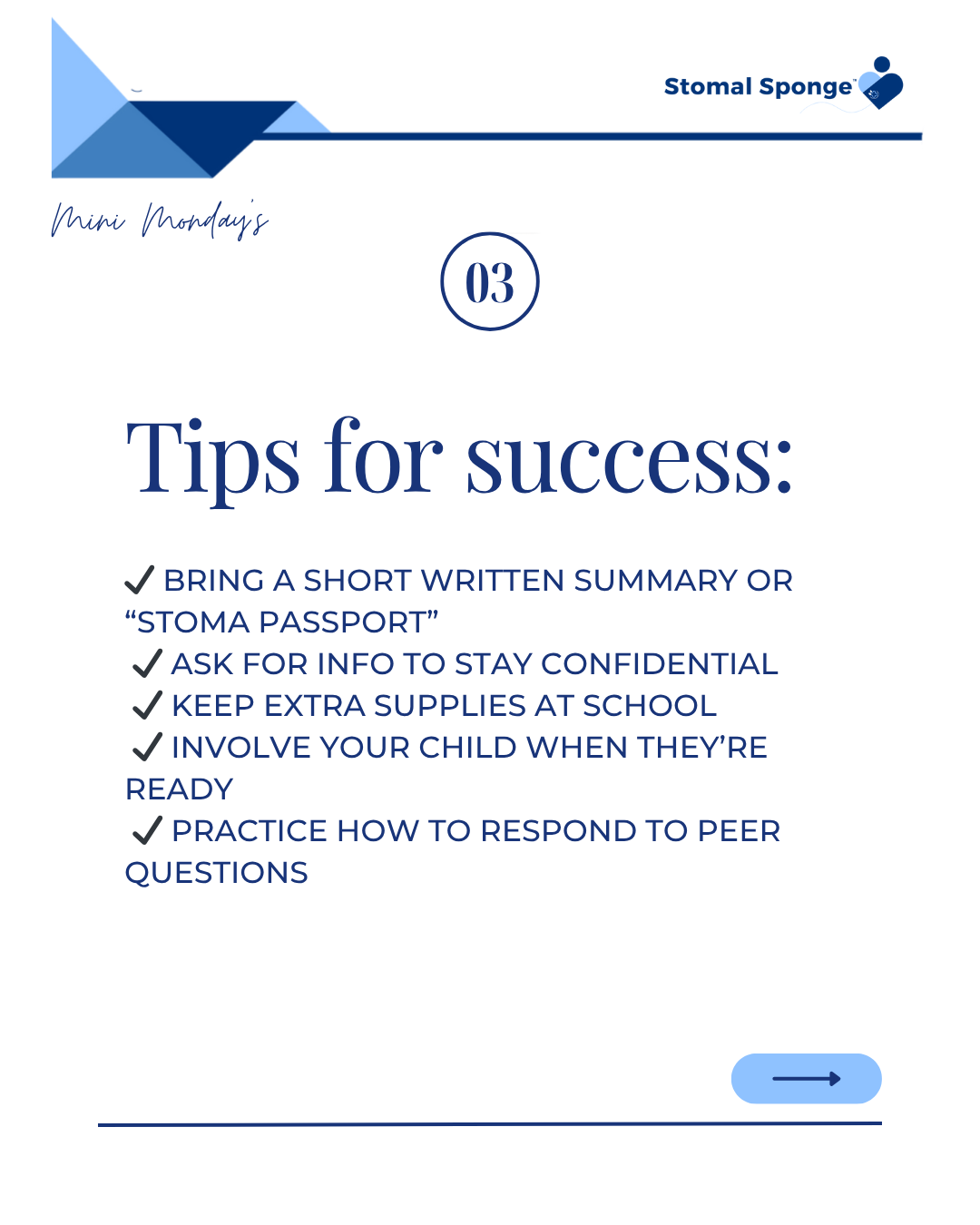
Practical Tips for Parents
Share only what’s necessary for safety and support
Provide written instructions for emergencies
Ask for privacy and sensitivity around your child’s needs
Keep spare supplies at school if needed
Encourage your child’s independence in managing their stoma
Limitations to Be Aware Of
Not all school staff will be familiar with stomas. You may need to explain the basics more than once or advocate for your child’s needs over time. Collaboration often improves as awareness grows.
Take-Home Message
Sharing essential information with teachers helps your child feel supported, safe, and confident at school. Keep the focus on practical needs, protect your child’s privacy, and work together with staff to build a respectful, informed environment.
References Convatec. (2023). Back to School After Ostomy Surgery: A Guide Link Royal Children’s Hospital. (n.d.). Sam Has a Stoma Link Coloplast. (2020). Wellness Education: Resource Sheet for Caregivers, Teachers and School Nurse Link Oxford University Hospitals. (2020). A Guide to Stoma Care for Teachers in Secondary School Link Local Resources Ostomy Australia Stomal Therapy Nurses Association
This post is for general information only and is not medical advice. Always consult with healthcare professionals regarding your child’s individual needs.
References:
David, J. G., Dotson, J., & Mackner, L. (2024). Is it "all in the bag?" Multidisciplinary perspectives on ostomy surgery in pediatric IBD across the ImproveCareNow network. JPGN Reports, 5(2), 101-109. https://doi.org/10.1002/jpr3.12044
Forest-Lalande, L. (2023). Best practice guidelines for ostomy care in neonates, children, and adolescents: An executive summary. Journal of Wound Ostomy Continence Nursing, 50(5), 381-385. https://doi.org/10.1097/WON.0000000000001001
Hakim, A., Kazemi, S., Peyvasteh, M., & Haghighizadeh, M. H. (2025). The effectiveness of the educational program on knowledge and caring performance of parents of children with colostomy: A clinical trial study. BMC Pediatrics, 25, 319. https://doi.org/10.1186/s12887-025-05591-y
General information only, not medical advice.
Local resources:
Ostomy Australia: https://www.ostomyaustralia.org.au
Stomal Therapy Nurses Association: https://www.stomaltherapy.com